Tag: Paridaens

  • Rotterdamse oogarts Dr Dion Paridaens in Napels benoemd tot President van de European Society of Ophthalmic Plastic & Reconstructive Surgery (E.S.O.P.R.S.)

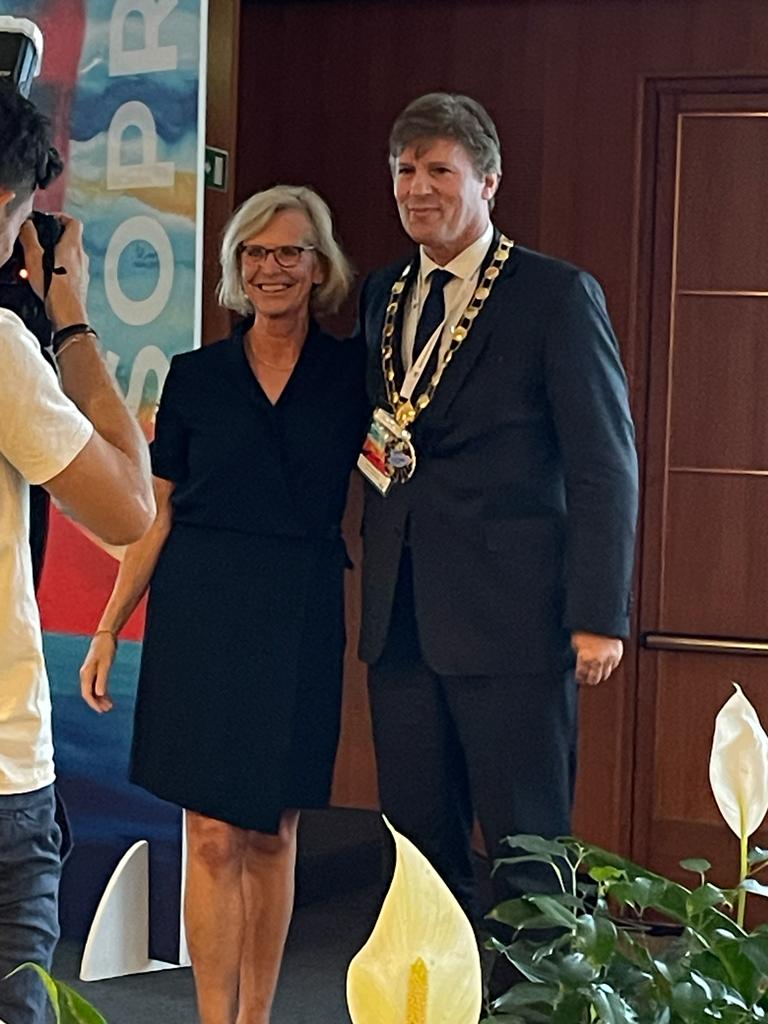
    Dion Paridaens, President ESOPRS, samen met Eva Dafgard-Kopp, Past-president tijdens de 41st Annual Meeting van ESOPRS in Napels op 16 september 2023

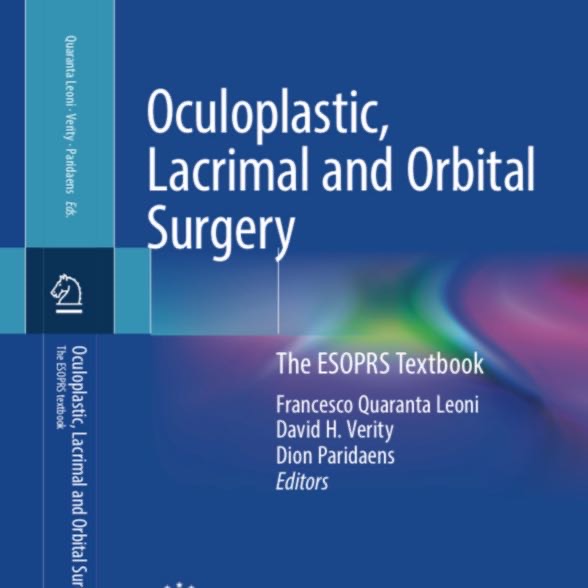
    Op 16 september 2023 heeft Dr Dion Paridaens, oogarts in het Oogziekenhuis Rotterdam en het Erasmus MC, zijn Zweedse collega Eva Dafgard Kopp opgevolgd als President van de European Society of Ophthalmic Plastic & Reconstructive Surgery (E.S.O.P.R.S.). Hij zal deze prestigieuze rol gedurende twee jaar mogen invullen, waarna hij nog een jaar Past-President zal zijn binnen het bestuur van ESOPRS. De vereniging richt zich op educatie en nascholing van gespecialiseerde oogartsen/oculoplastisch chirurgen en telt honderden Europese leden, en tevens vele leden uit andere continenten. Jaarlijks is er een meerdaagse jaarvergadering dat de laatste jaren ongeveer 800 bezoekers uit de hele wereld trekt. Kennisoverdracht staat hierbij op de voorgrond. Ook is er gelegenheid voor jonge specialisten om een deelspecialistisch Europees (EBO-ESOPRS) examen af te leggen. Hiervoor werd door ESOPRS bestuurders, inclusief dr Paridaens, een boek samengesteld (ESOPRS Textbook on Oculoplastic, Lacrimal & Orbital Surgery) dat in november 2023 op de markt zal komen.

    In zijn rol als President zal hij ESOPRS vertegenwoordigen bij jaarcongressen van zusterverenigingen in andere continenten (Amerika en Azie). Ook zal er geparticipeerd worden bij educatieve webinars. 

    Bijzonder is dat hij -samen met zijn Amsterdamse collega Prof Peerooz Saeed en een team van Rotterdamse collega’s– de 42nd Annual Meeting van ESOPRS in Rotterdam zal gaan organiseren. Dit zal plaatsvinden in het congrescentrum de Doelen (september 12-14, 2024; zie www.esoprs.eu) en wordt ondersteund door het Congresburo (Erasmus MC)
  • First textbook of the European Society of Ophthalmic Plastic & Reconstructive Surgery (ESOPRS) in press

    Several years ago, three Executive Council members started the first preparations to write a textbook on Ophthalmic Plastic & Reconstructive Surgery to serve as teaching material for the upcoming EBO ESOPRS examination, which will start in September 2023. In addition, it could serve as a reference book.

    The ESOPRS book will have 7 sections, each with varying numbers of chapters, focussing on the history of ESOPRS, functional eyelid disorders, cosmetic oculofacial surgery, lacrimal disorders, socket disorders, orbital disease, thyroid eye disease. The editors/authors (Francesco Quaranta Leoni (Villa Tiberia Hospital, Rome), David Verity (Moorfields Eye Hospital, London) and Dion Paridaens (Rotterdam Eye Hospital & Erasmus MC, Rotterdam)) and other authors have completed the work in May, and hope that Springer will publish the ESOPRS book (2 volumes, approx 1200 pages) in the fall of 2023.

    The Editors hope and expect publication of the ESOPRS Textbook in the Fall of 2023
  • Dion Paridaens moderator and speaker at N.O.G. Meeting in Maastricht

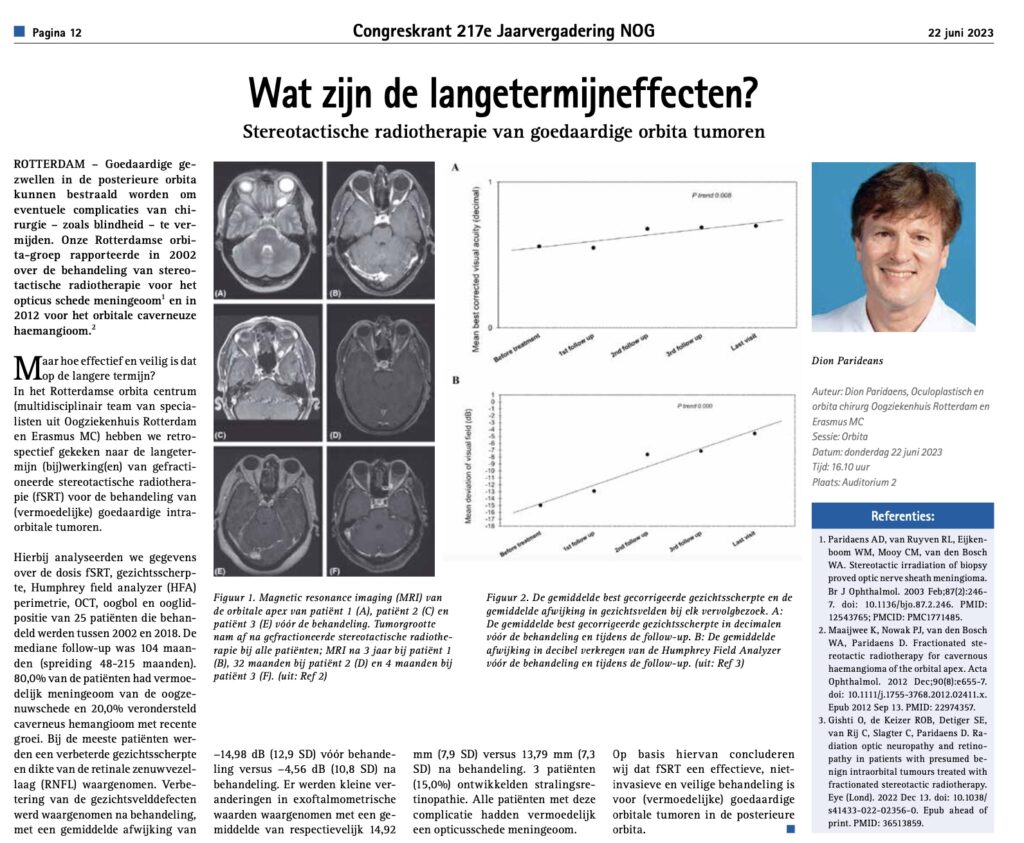
    On June 22, 2023 Dion Paridaens (co-)moderated the Orbit and Lids sections of the Annual Meeting of the Dutch Ophthalmology Congress (N.O.G.) in Maastricht, the Netherlands. In addition he gave a lecture on “Long-term (peri-)ocular (side-)effects of stereotactic radiotherapy in patients with (presumed) benign lesions of the orbital apex”.

    A report on this lecture was included in the meetings’ journal

  • Dion Paridaens invited speaker in Barcelona atXXII Intl. Course Clínica Planas (June 15-17, 2023)

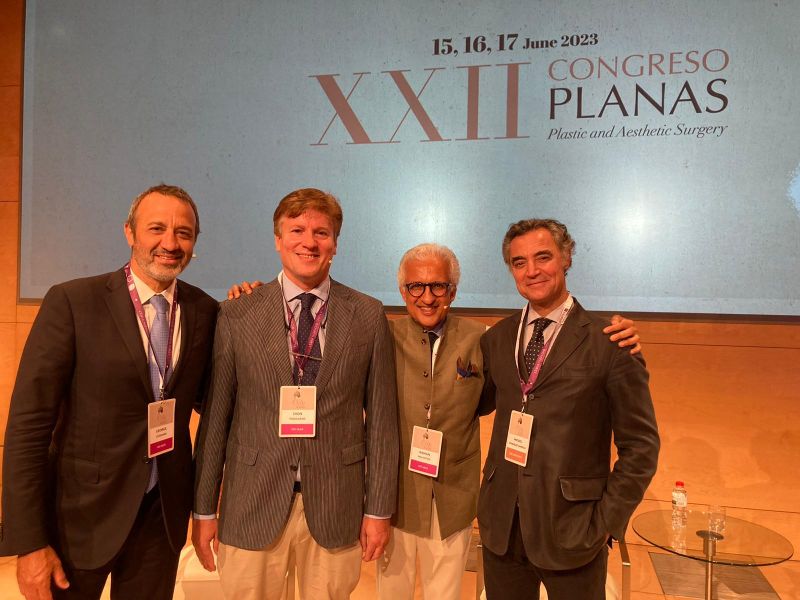
    XXII Intl. Course Clínica Planas_Barcelona, Spain (June 15-17, 2023). It was a great honour to be a guest speaker at this event, which attracted over 200 colleagues, mostly plastic surgeons, from all over the globe and to contribute with two lectures on canthal fixation techniques in transcutaneous lower blepharoplasty and surgical correction of lower lid retraction during an oculoplastic session. Other speakers during this session, moderated by Miguel Gonzalez-Candial (Spain), were George Charonis (Greece) and Raman Malhotra (UK). Special thanks to the family Planas for hosting us.

    Oculoplastic surgeons George Charonis, Dion Paridaens, Raman Malhotra and Miguel Gonzalez-Candial (from left to right) at the Clinica Planas Meeting
  • Dion Paridaens invited speaker at the 56th Panhellenic Ophthalmology Congress June 8-10, 2023, in Greece

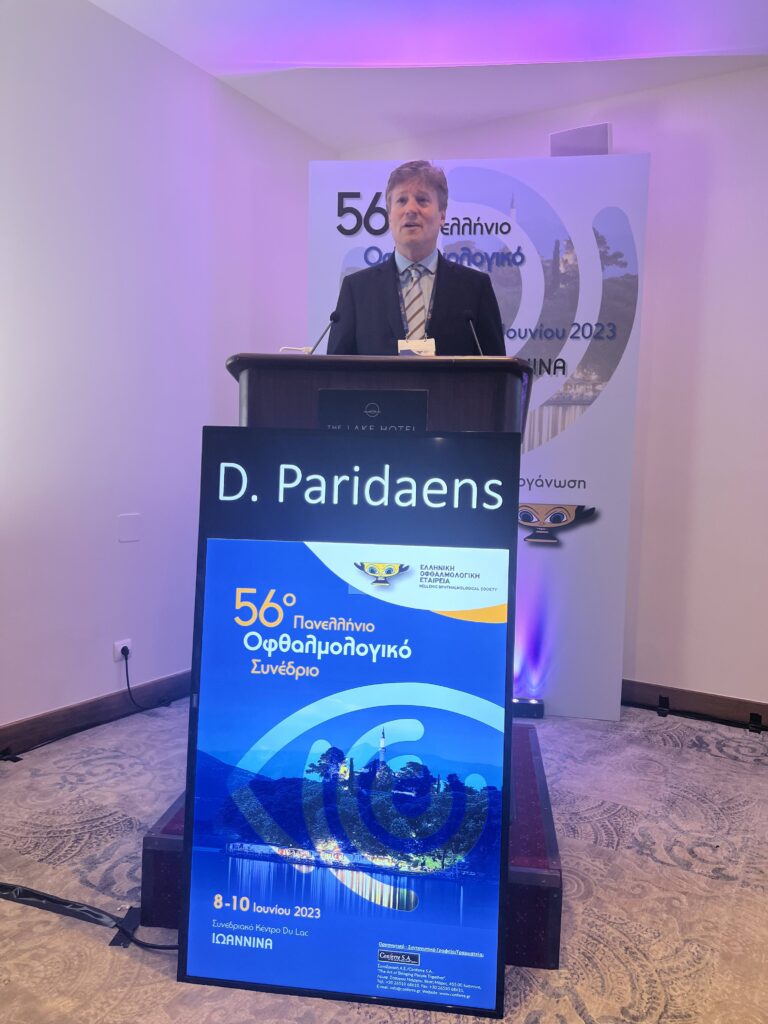
    Grateful for the kind invitation to be a guest speaker at the 56th Panhellenic Ophthalmology Congress, June 8-10, 2023 in the wonderful setting of Ioannina, Greece. Lectures about “Orbital Biopsy Techniques” and “IgG 4 related disease”. Special thanks to my friends George Charonis (President), Yanni Ntountas, and Prof Efthathios Detorakis for hosting us.

  • Dr Paridaens uit Rotterdam treedt toe tot internationale ‘Orbital Society’ als ‘advisory member’

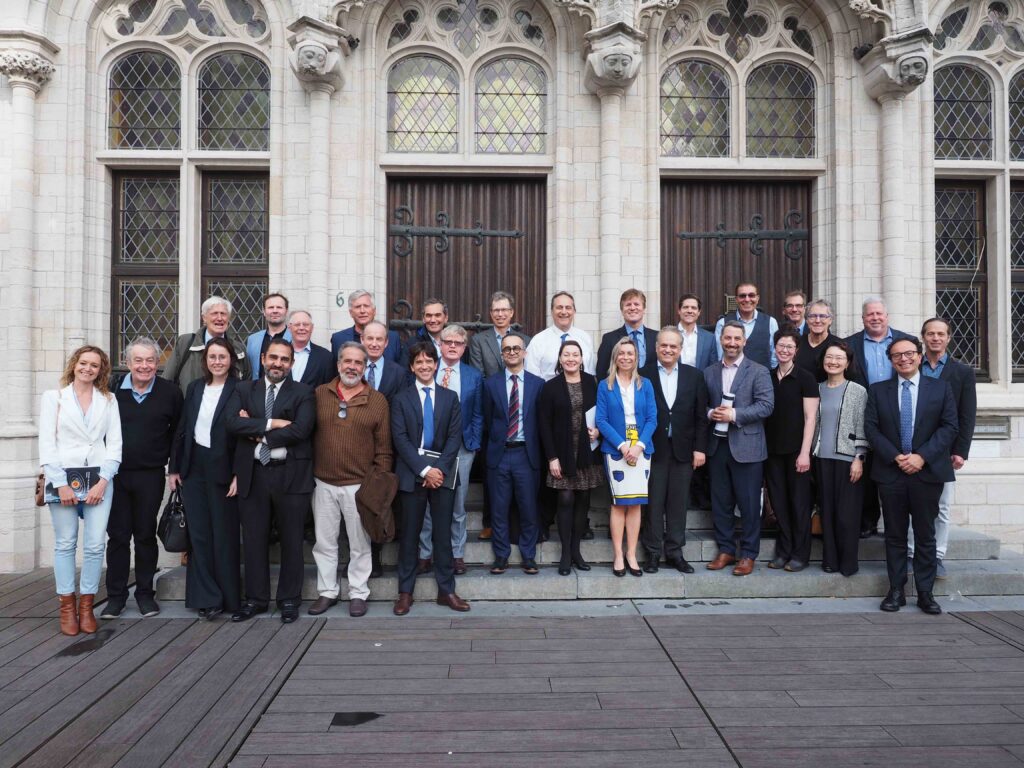
    Tijdens een meeting in Leuven op 12 mei 2023 is de Rotterdamse orbitachirurg/oogarts Dr Dion Paridaens als ‘Advisory Member’ toegetreden tot de prestigieuze internationale ‘Orbital Society’. Dit is een (besloten) groep experts uit alle continenten die fysiek en digitaal bijeenkomt voor kennisuitwisseling en afstemmen van adviezen en richtlijnen over behandeling van orbitale aandoeningen. 

    Orbital Society members meeting in Louvain, May 2023
  • Oogarts Dr Paridaens uit Oogziekenhuis Rotterdam/Erasmus MC gastoperateur in MUMC

    Op 8 mei 2023 was dr Dion Paridaens, oogarts in het Oogziekenhuis Rotterdam/Erasmus MC gastoperateur in het MUMC om samen met zijn oud-fellow Drs Asli Ayvaz, oogarts in het MUMC complexe orbita chirurgie te verrichten bij twee patiënten met dreigende blindheid. De ingrepen werden met succes uitgevoerd door het operatie team in de fraaie setting van het operatie complex van het MUMC. Gastvrijheid werd verleend door Prof dr C Webers, oogarts en afdelingshoofd. Er is al langere tijd een intensieve samenwerking tussen de afdeling orbitachirurgie van beide instellingen, ook op het gebied van oogheelkundige research.

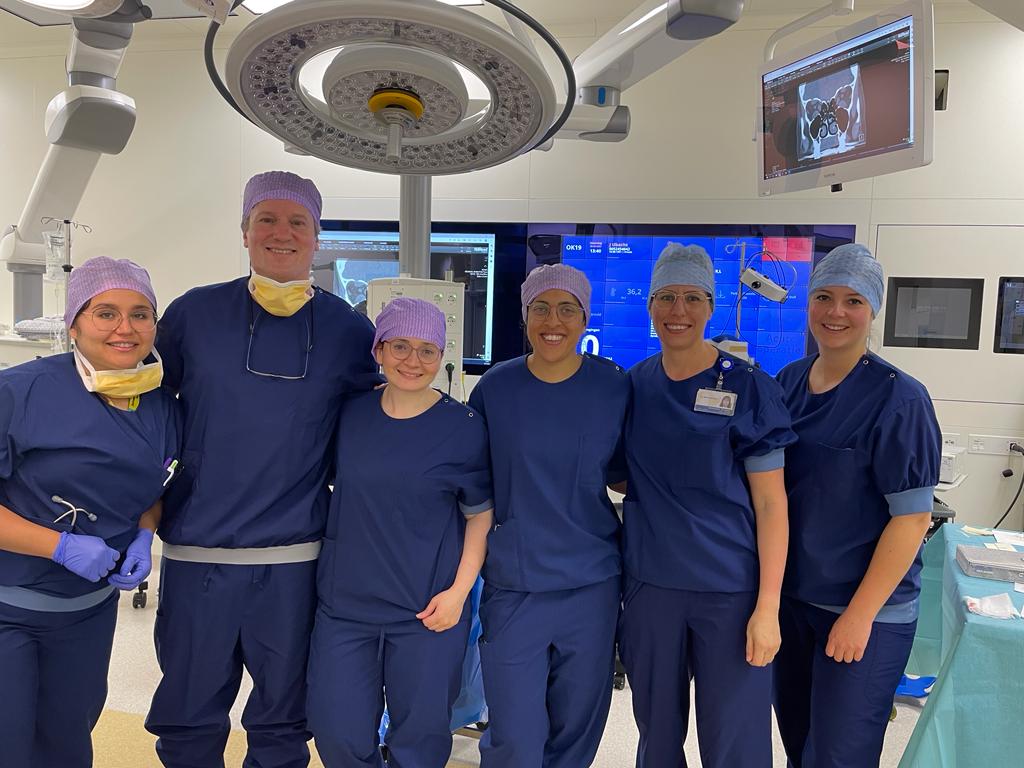
    Op de foto staat Drs Ayvaz (3e van links) en Dr Paridaens (2e van links) te midden van het OK team.

  • Globe-sparing surgical treatment for periocular malignancies with anterior orbital invasion

    Bergmann MJ, de Keizer ROB, Paridaens D. Globe-sparing surgical treatment for periocular malignancies with anterior orbital invasion: a consecutive case series. Orbit. 2023 Jan 8:1-9. doi: 10.1080/01676830.2022.2141803. Epub ahead of print. PMID: 36617852.

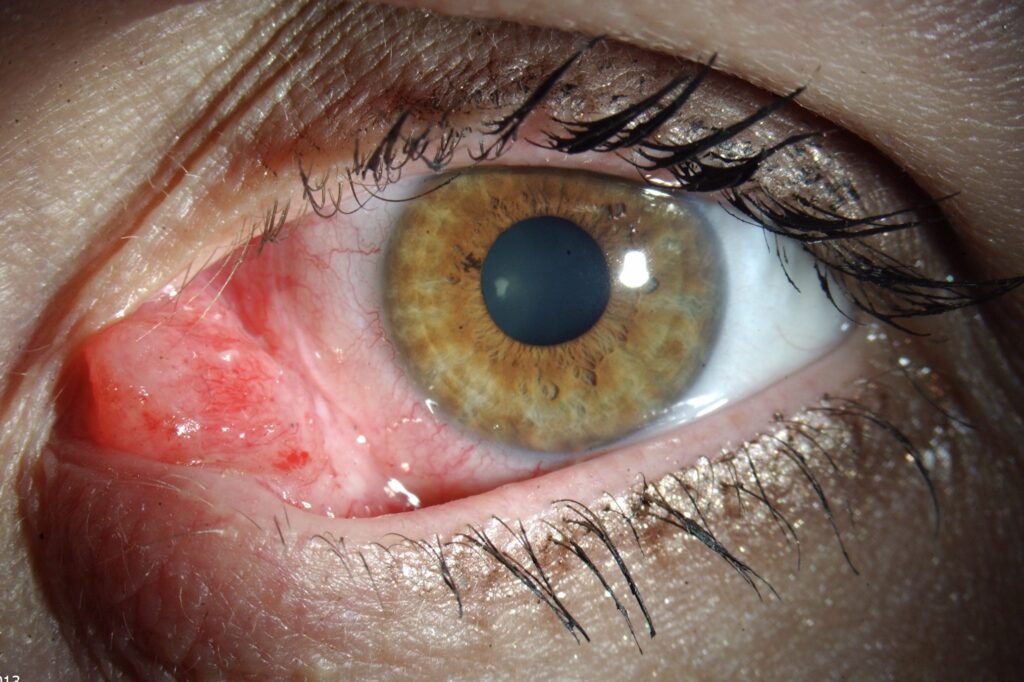
    Preoperative view on biopsy proven squamous cell carcinoma invading the left orbit (Dr Paridaens, with permission of patient)

    Recently, we published our results on eye-sparing techniques to treat (non-basal cell carcinoma) eyelid malignancies that had invaded the orbit. Orbital exenteration of periocular tumors complicated by orbital invasion is a heavy burden for patients and leads to disfiguring cosmesis and loss of vision.

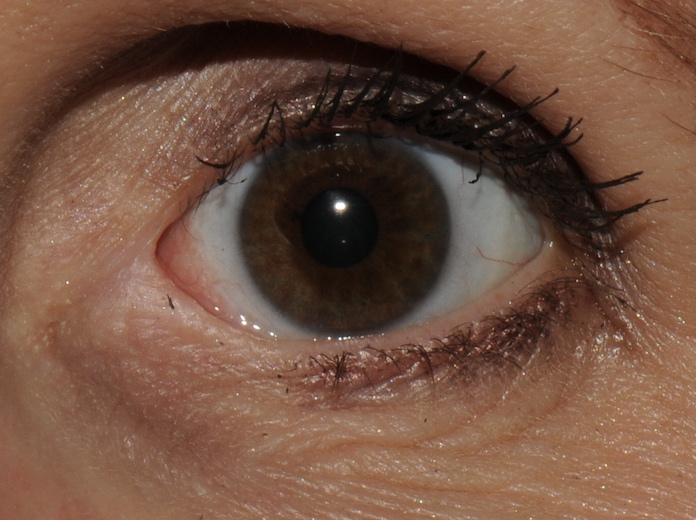
    Post surgical image depicting reconstructed eyelids and ocular surface after en bloc removal of large invasive squamous cell carcinoma (surgeon Dion Paridaens, PhD MD, with permission of patient, who has remained disease-free to date (since many years))

    Methods: In a consecutive case series, we examined medical records of all patients between 2000 and 2018 with periocular malignancies (other than BCC) invading the anterior orbit (without extraocular muscle or scleral invasion) treated by one orbital surgeon (Dion Paridaens). The main outcome measures included local recurrence, regional and distant metastasis, survival, and visual acuity.

    Results: Nine patients were identified. Of the non-BCC cancers invading the orbit, squamous cell carcinoma (SCC) (44.4%) was the most prevalent type in our series. Excision included the removal of visibly distinguishable tumor and a free clinical margin of up to 5 mm with histological confirmation of radicality of the invasive tumor component. Reconstruction was achieved by a variety of oculoplastic reconstructive procedures. At a mean follow-up of 70 months (range 11-177 months), 8 out of 9 patients were still alive. Recurrence occurred in two patients with conjunctival melanoma (CM), and they were again treated with wide excision. Postoperative visual acuity remained stable or improved.

    Conclusion: Our retrospective case series demonstrates that globe-sparing excisional surgery can be considered in selected cases of periocular malignancies other than BCC with anterior orbital invasion, thus avoiding cosmetic disfigurement and loss of vision due to orbital exenteration.

  • Modified DCR surgery for patients with a tearing eye: Medial lacrimal sac excision versus conventional H-shaped lacrimal sac opening in external dacryocystorhinostomy

    Roohé SL, Helsen S, Paridaens D. Medial lacrimal sac excision versus conventional H-shaped lacrimal sac opening in external dacryocystorhinostomy: a comparative cohort study. Orbit. 2023 Jan 26:1-7. doi: 10.1080/01676830.2023.2168017. Epub ahead of print. PMID: 36700372.

    For patients with a tearing eye due to an acquired nasolacrimal duct stenosis, the external dacryocystorhinostomy (Ex-DCR) is a reliable but surgically challenging procedure. Dion Paridaens and his team in the Rotterdam Eye Hospital developed a surgical modification of the classic external DCR technique and recently reported on the outcome of patients treated with this modified technique and that of a historical cohort treated with the conventional technique.

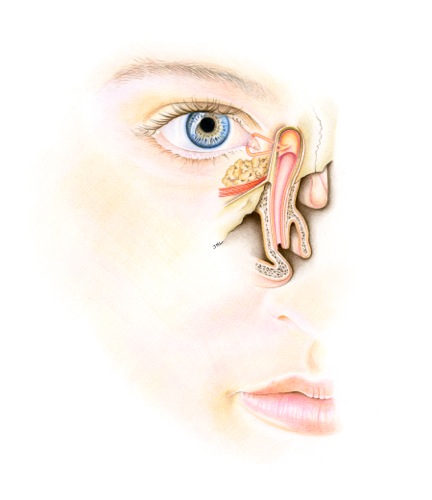
    Anatomy of right lacrimal sac and canaliculi. ©Dion Paridaens, PhD MD

    Methods: This comparative cohort study included adult patients undergoing Ex-DCR for primary acquired NLDO by or under supervision of dr Dion Paridaens, PhD MD. Group 1 (conventional Ex-DCR including H-shaped incision, anastomosis of the anterior mucosal flap to nasal mucosal flap and resection of the posterior sac flap) was compared with Group 2 (modified Ex-DCR including excision of the medial lacrimal sac and anastomosis of remaining anterior sac flap to nasal mucosal flap). Outcome measures included the success rate (defined as complete symptom relief or patent irrigation after three months), reoperation rate, redo-free survival within five years, and occurrence of postoperative bleeding and postoperative infection.

    Results: 138 patients were included. The success rates were 94.7% (54/57 cases) for Group 1 and 96.3% (78/81) for Group 2 (p-value = 0.658). The redo-rate was 5.3% (3/75) in Group 1 and 2.5% (2/81) in Group 2 (p = 0.331). Two-year redo-free survival probability estimates were 89.8% for Group 1 and 96.3% for Group 2, respectively. No complications occurred in Group 2, whereas in Group 1, one patient (1.8%) suffered from postoperative bleeding and one (1.8%) from postoperative infection.

    Conclusions: our study showed that the modified Ex-DCR technique is equally efficacious compared with the conventional Ex-DCR technique in adult patients with NLDO.

    Advantages of the modified technique include: 1. need for fewer instruments 2. less risk of injury to common canaliculus, 3. faster procedure

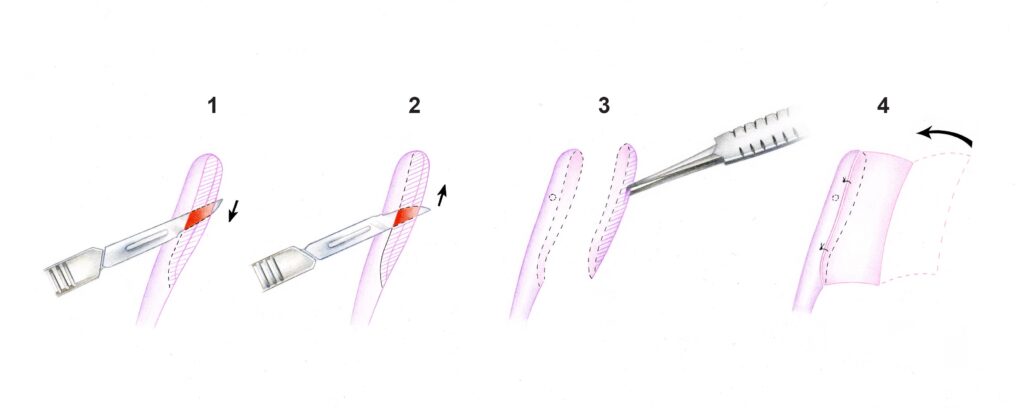
    Excision of medial lacrimal sac parallel to plane of common canalicular osteum in lateral sac wall, followed by suturing of nasal flap to lacrimal sac (technique by Dion Paridaens PhD MD, ©Dion Paridaens)

  • Dr Dion Paridaens co-promotor bij dissertatie over conjunctiva melanomen in Rotterdam

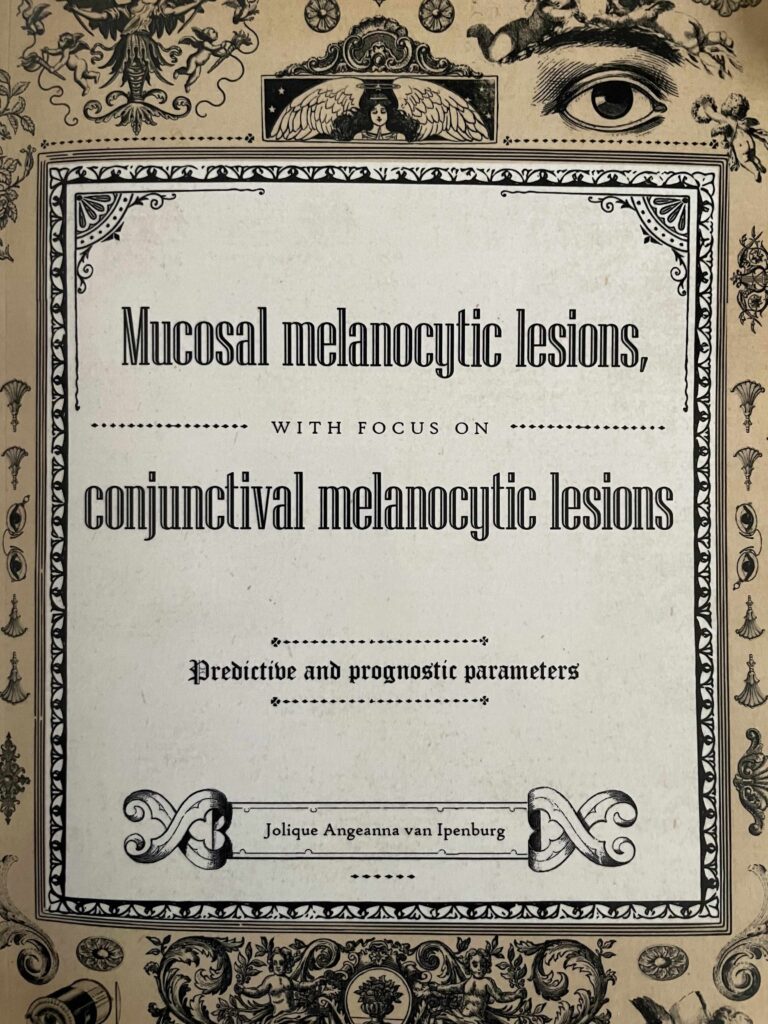
    Op woensdag 3 mei om 13.00 heeft Drs Jolique Ipenburg, patholoog en tevens professionele harpiste, haar proefschrift over melanomen van slijmvliezen, o.a. van het oog met succes verdedigd. De titel van de dissertatie luidt “Mucosal melanocytic lesions, with focus on conjunctival melanocytic lesions” en omvat diverse gepubliceerde wetenschappelijke artikelen, die zij met supervisie van Dr Rob Verdijk, patholoog (in het Erasmus MC, LUMC en Consulent van het Oogziekenhuis Rotterdam), en Dr Dion Paridaens, oogarts/oculair oncoloog/oculoplastisch en orbitachirurg (in het Oogziekenhuis Rotterdam en in Erasmus MC) had geschreven. Genoemde heren hadden ieder een rol als “co-promotor”. De wetenschappelijke studies hebben nieuwe inzichten in het ontstaan van slijmvliesmelanomen opgeleverd. Ook werd gekeken naar diverse prognostische variabelen en mogelijke aangrijpingspunten voor therapie van deze levensbedreigende maligniteiten. 

    In het Oogziekenhuis Rotterdam worden frequent tumoren van oogslijmvlies, ooglid en oogkas behandeld. De oncologische oog afdeling werkt nauw samen met collega’s in het Erasmus MC via een samenwerkingsverband ROMS. Dr Paridaens promoveerde precies 30 jaar geleden, in 1993, zelf aan de Universiteit van Utrecht op “Clinicopathologic aspects of ocular melanomas” op basis van in Londen verricht onderzoek. Hierbij werd in die tijd de grootste gepubliceerde serie van invasieve conjunctiva melanomen geanalyseerd op prognostische kenmerken en uitkomst van diverse operaties, zoals orbitale exenteratie (oogkasinhoud verwijdering). In zijn proefschrift -dat onderscheiden werd met de prestigieuze FC Dondersprijs-  werd o.a. gepleit voor oogsparende chirurgie (gecombineerd met adjuvante  therapie) in plaats van mutilerende exenteratie bij bepaalde patienten met het conjunctiva melanoom. 

    In latere jaren heeft Dr Paridaens het wetenschappelijk onderzoek voortgezet. Zo rapporteerde zijn groep voor het eerst over gebruik van amnion transplantatie bij de behandeling van conjunctiva melanomen. Bij de behandeling in het Oogziekenhuis wordt door oculoplastisch oncologische oogartsen nauw samengewerkt met oncologische cornea (hoornvlies)artsen. Sommige operaties worden ook gezamenlijk uitgevoerd. 

    Dr Ipenburg zal vanuit haar nieuwe betrekking in het Radboud Ziekenhuis blijven samenwerken met haar Rotterdamse collega’s in het Oogziekenhuis en Erasmus MC. 

    Foto: cover proefschrift Dr Ipenburg