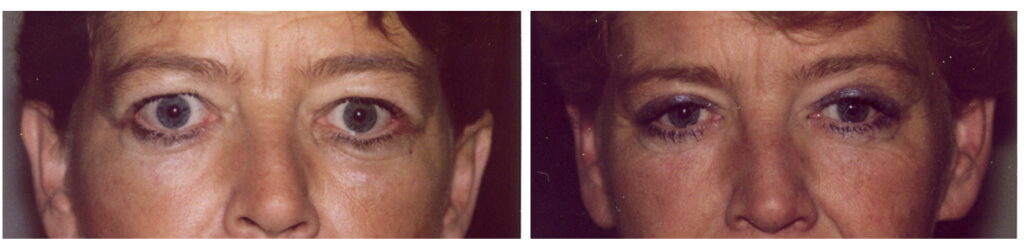
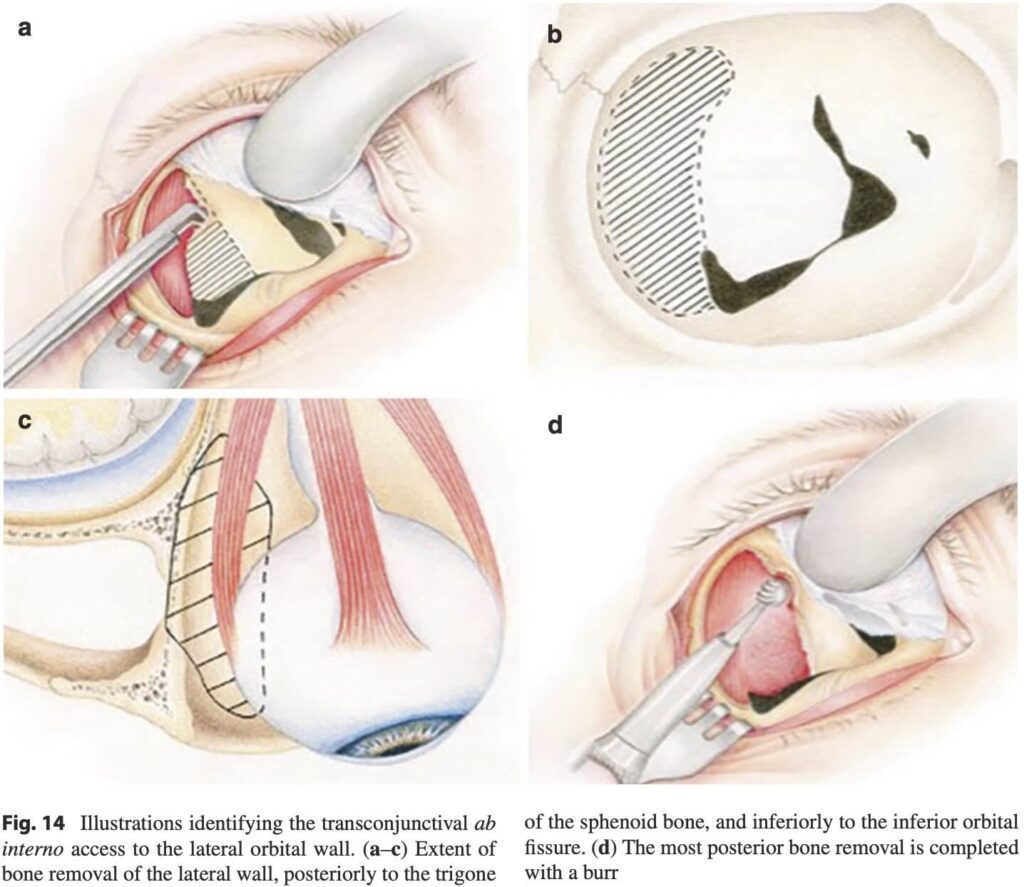
In 2000, we published a new surgical approach for orbital decompression in patients with Graves’ orbitopathy: Ab Interno Lateral Wall Decompression. More than two decades later, it is gratifying to see that this technique continues to be used by orbital surgeons worldwide and remains a valuable option in the surgical management of thyroid eye disease.
The concept behind Ab Interno Lateral Wall Decompression was straightforward: achieve effective proptosis reduction while minimizing surgical morbidity and maximizing cosmetic outcomes. By approaching the lateral orbital wall from within the orbit, the technique offers several important advantages. It results in minimal visible scarring, provides favorable proptosis reduction with a low risk of inducing diplopia, and avoids disruption of the temporalis muscle, thereby preventing temporalis atrophy and the associated functional and cosmetic concerns.
An additional advantage is the versatility of the approach. Ab Interno Lateral Wall Decompression can be readily combined with decompression of the medial wall and orbital floor when greater reduction of proptosis is required. Through a swinging eyelid approach and/or a transcaruncular approach, surgeons can access multiple orbital walls while maintaining excellent exposure and avoiding external facial incisions. This flexibility allows the procedure to be tailored to the severity and pattern of disease, ranging from isolated lateral wall decompression to balanced multi-wall decompression.
The enduring popularity of Ab Interno Lateral Wall Decompression reflects the importance of balancing surgical efficacy with patient-centered outcomes. While reducing proptosis is a primary objective, preserving ocular motility, minimizing complications, and optimizing cosmetic results are equally important considerations for both patients and surgeons.
What makes me particularly proud is not only the procedure itself, but also the environment in which it was developed. At Het Oogziekenhuis Rotterdam, in close collaboration with Erasmus MC, research into the pathophysiology and treatment of Graves’ orbitopathy has been a major focus for decades. The combination of clinical excellence, scientific inquiry, and multidisciplinary collaboration provided the foundation for developing and refining innovative surgical approaches such as Ab Interno Lateral Wall Decompression.
Looking back, it is rewarding to know that a technique developed in Rotterdam continues to benefit patients more than 25 years after its introduction. Surgical innovations rarely succeed because of technical ingenuity alone; they endure because they improve outcomes and quality of life for patients. The continued use of Ab Interno Lateral Wall Decompression is a testament to the dedication of colleagues, mentors, researchers, trainees, and patients who contributed to its development and evaluation over the years.
As our understanding of Graves’ orbitopathy continues to evolve, and as new treatments emerge, it is worth reflecting on how meaningful advances are achieved: through the integration of clinical care, research, and a commitment to improving the lives of our patients.
Reference
Paridaens DA, Verhoeff K, Bouwens D, Van den Bosch WA. Transconjunctival orbital decompression in Graves’ ophthalmopathy: lateral wall approach ab interno. British Journal of Ophthalmology. 2000;84(7):775–781.
#GravesOrbitopathy #ThyroidEyeDisease #OrbitalSurgery #AbInternoLateralWallDecompression #Oculoplastics #OrbitalDecompression #MedicalInnovation #ErasmusMC #OogziekenhuisRotterdam #PatientCare